



Company

Textr eSIM

Year

2022 - 2024

Scope of work

iOS + Android App design

Website design

Product & Strategy

Research & Insights

Design Execution

Cross-Functional Delivery

Main stack

Industry

Telecommunication

Travel

eSIM

Company

Textr eSIM

Year

2022 - 2024

Scope of work

iOS + Android App design

Website design

Product & Strategy

Research & Insights

Design Execution

Cross-Functional Delivery

Main stack

Industry

Telecommunication

Travel

eSIM

Unfamiliar Tech to Trusted Travel Utility 800,000+ Users in 130+ Countries

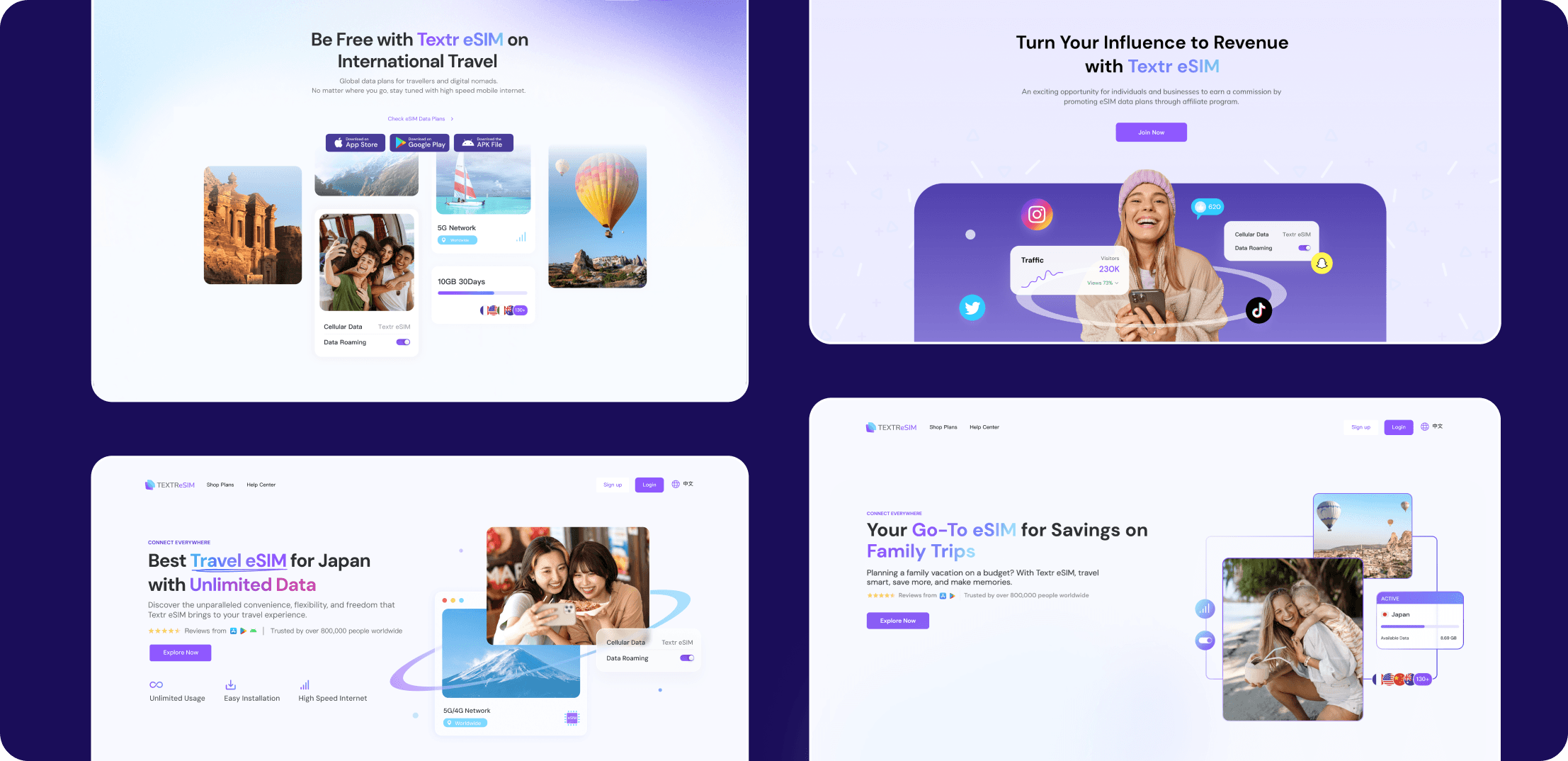
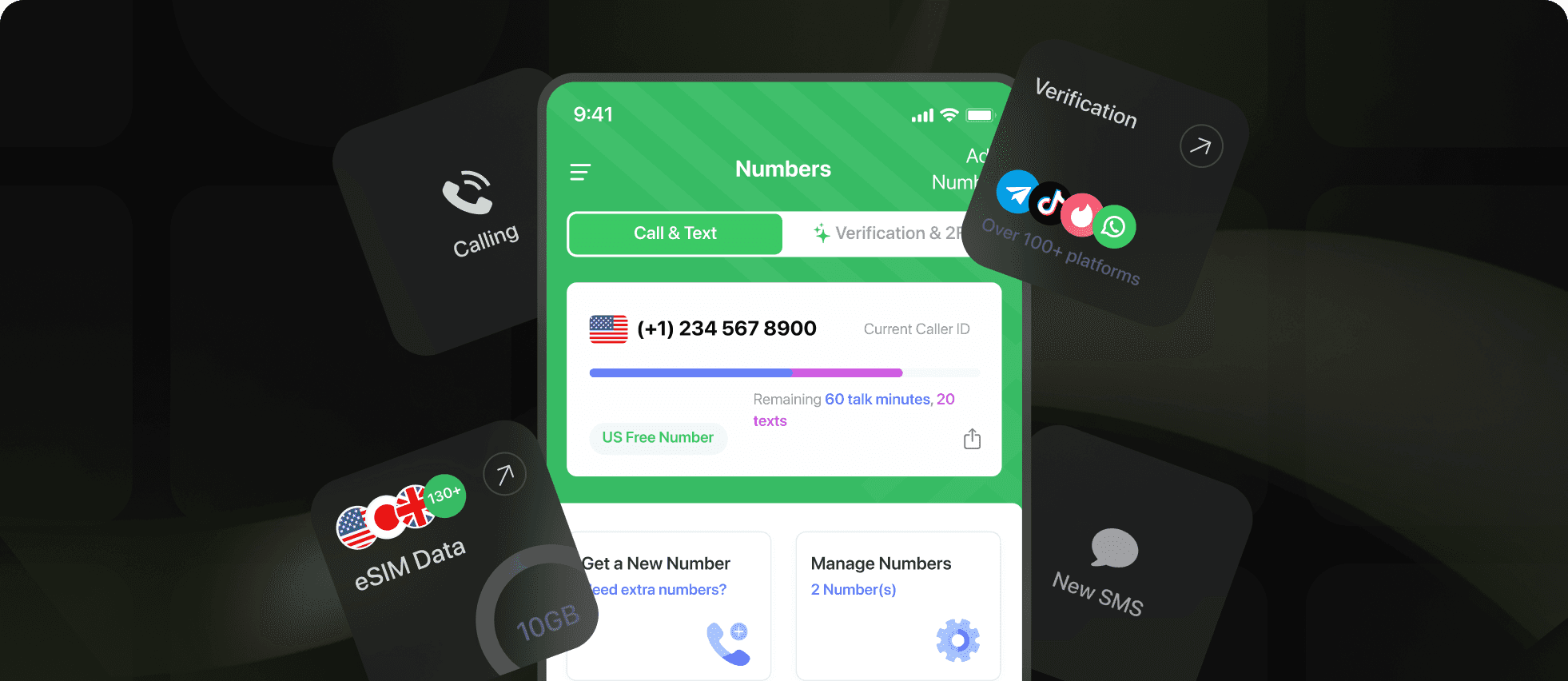
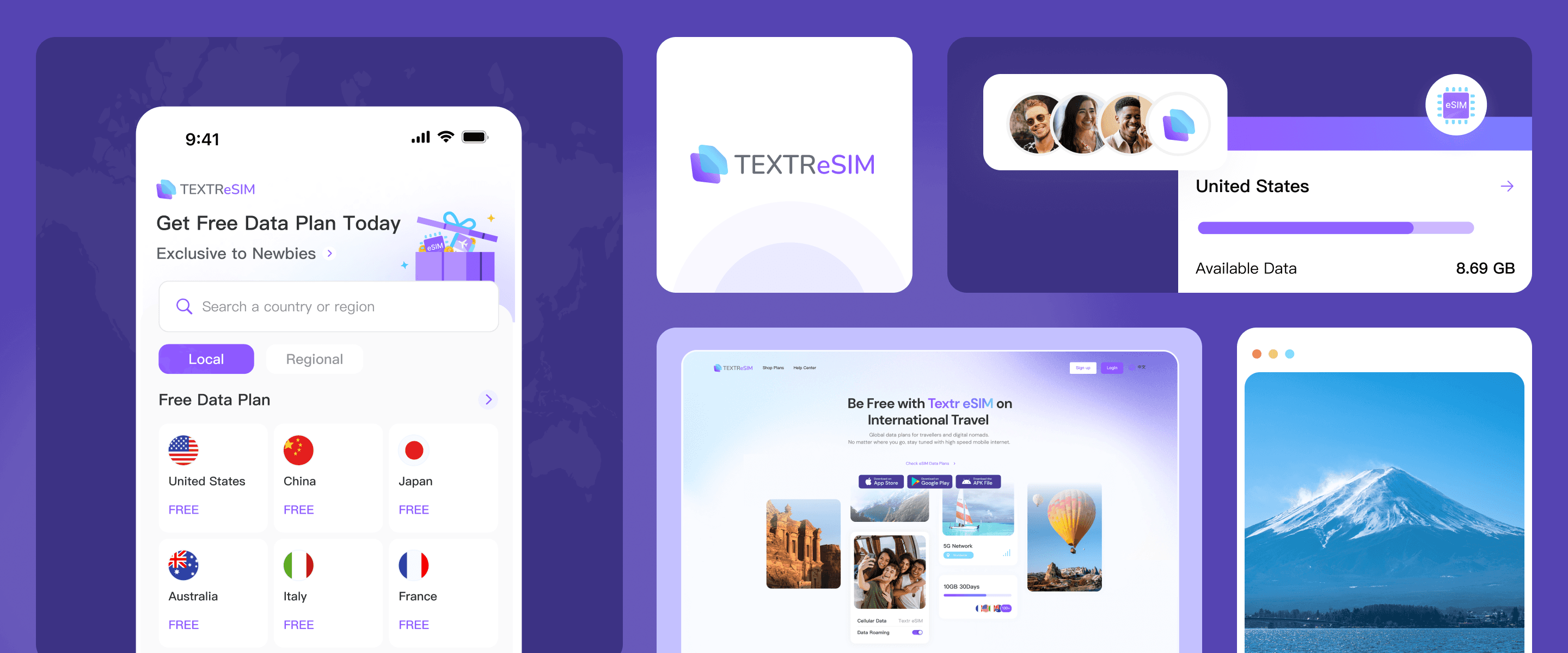
Textr eSIM is a global data plan product for travelers in 130+ countries. In early 2022 it was a simple MVP with unclear install steps, no compatibility checks, and low user trust—driving high support volume.


With access to millions of PingMe/WePhone users, I led research (large-scale surveys + interviews + usability tests + ticket analysis) to pinpoint the biggest drop-offs, then designed the end-to-end experience across app, web, and a shared design system—helping scale Textr eSIM to 800,000+ users.

View live site
The impact

800K+

Grew to 800,000+ active users

Reached over 800,000 users

130+

Coverage expanded to 130+ countries

50K+

Subdomain reached 50K+ monthly visits

Loyal users, consistent growth

High satisfaction drove repurchases, reflecting trust in our seamless connectivity and user-centric improvements.

Global carrier alliances

Partnered with Alipay and China Mobile, delivering reliable connectivity in 130+ countries.

800K+

Grew to 800,000+ active users

130+

Coverage expanded to 130+ countries

50K+

Subdomain reached 50K+ monthly visits

Loyal users, consistent growth

High satisfaction drove repurchases, reflecting trust in our seamless connectivity and user-centric improvements.

Global carrier alliances

Partnered with Alipay and China Mobile, delivering reliable connectivity in 130+ countries.

Team & My Role

Team Structure

  • 2 Product Designers (App + Web)
  • 1 Product Lead
  • 4 Developers
  • Marketing & support team

My Role

As the core designer, I was involved end-to-end:


Product & Strategy

  • Contributed to roadmap planning

  • Defined early UX priorities

  • Created problem framing & success metrics


Design Execution

  • Lead designer for Textr eSIM iOS/Android app

  • Designed Textr eSIM website end-to-end

  • Built the cross-platform Design System used across all Textr products


Research & Insights

  • Conducted quant surveys using the massive PingMe/WePhone user pool

  • Ran qualitative interviews with travelers across segments

  • Shadowed support team to analyze ticket patterns

  • Performed installation usability tests (internal & external)


Cross-Functional Delivery

  • Wrote PRDs with PM

  • Supported developers during implementation

  • Conducted design QA and flow validation

  • Partnered with marketing on ASO/SEO experiments

Team & My Role

Team Structure

  • 2 Product Designers (App + Web)
  • 1 Product Lead
  • 4 Developers
  • Marketing & support team

My Role

As the core designer, I was involved end-to-end:


Product & Strategy

  • Contributed to roadmap planning

  • Defined early UX priorities

  • Created problem framing & success metrics


Design Execution

  • Lead designer for Textr eSIM iOS/Android app

  • Designed Textr eSIM website end-to-end

  • Built the cross-platform Design System used across all Textr products


Research & Insights

  • Conducted quant surveys using the massive PingMe/WePhone user pool

  • Ran qualitative interviews with travelers across segments

  • Shadowed support team to analyze ticket patterns

  • Performed installation usability tests (internal & external)


Cross-Functional Delivery

  • Wrote PRDs with PM

  • Supported developers during implementation

  • Conducted design QA and flow validation

  • Partnered with marketing on ASO/SEO experiments

Initial Discovery

Quantitative Insight

The Problem

Quantitative Insight (Large-scale survey via existing user pool)

Our company also operated two telecom apps with millions of users, so we ran a large-scale survey to understand travel frequency, how people buy connectivity abroad, their SIM/eSIM experience, and the biggest fears and trust blockers.

Survey sample: 400+ responses (PingMe + WePhone audience)


Key findings:

  • 62% of users were unsure if their device supported eSIM

  • 57% feared losing network during installation

  • 48% dropped off when asked to follow carrier-style instructions

  • Trust was valued 2× higher than price

  • “Install the moment I land” was the most common behavioral pattern


This gave us a statistically significant baseline that shaped our roadmap.

Initial Discovery

Quantitative Insight

Quantitative Insight (Large-scale survey via existing user pool)

Our company also operated two telecom apps with millions of users, so we ran a large-scale survey to understand travel frequency, how people buy connectivity abroad, their SIM/eSIM experience, and the biggest fears and trust blockers.

Survey sample: 400+ responses (PingMe + WePhone audience)


Key findings:

  • 62% of users were unsure if their device supported eSIM

  • 57% feared losing network during installation

  • 48% dropped off when asked to follow carrier-style instructions

  • Trust was valued 2× higher than price

  • “Install the moment I land” was the most common behavioral pattern


This gave us a statistically significant baseline that shaped our roadmap.

Qualitative Insight

Qualitative Insight (Interviews + Support Shadowing + Usertesting.com)

Interviews (n=18) — 3 traveler segments:


Key findings:

  • Business travelers → reliability > price

  • Leisure travelers → clarity > flexibility

  • Tech-savvy users → wanted control and speed

Support ticket analysis (300+ tickets from MVP)


Patterns aligned into 3 categories:

  • “I don’t know how to install.”

  • “Will this work on my phone?”

  • What if it fails when I land in?”

Usability testing (Usertesting.com, n=25)


We tested:

  • First-time purchase flow

  • Installation flow comprehension

  • Device compatibility expectations


Even highly educated users had low confidence performing eSIM installation without hand-holding guidance.

Qualitative Insight

Qualitative Insight (Interviews + Support Shadowing + Usertesting.com)

Interviews (n=18) — 3 traveler segments:


Key findings:

  • Business travelers → reliability > price

  • Leisure travelers → clarity > flexibility

  • Tech-savvy users → wanted control and speed

Support ticket analysis (300+ tickets from MVP)


Patterns aligned into 3 categories:

  • “I don’t know how to install.”

  • “Will this work on my phone?”

  • What if it fails when I land in?”

Usability testing (Usertesting.com, n=25)


We tested:

  • First-time purchase flow

  • Installation flow comprehension

  • Device compatibility expectations


Even highly educated users had low confidence performing eSIM installation without hand-holding guidance.

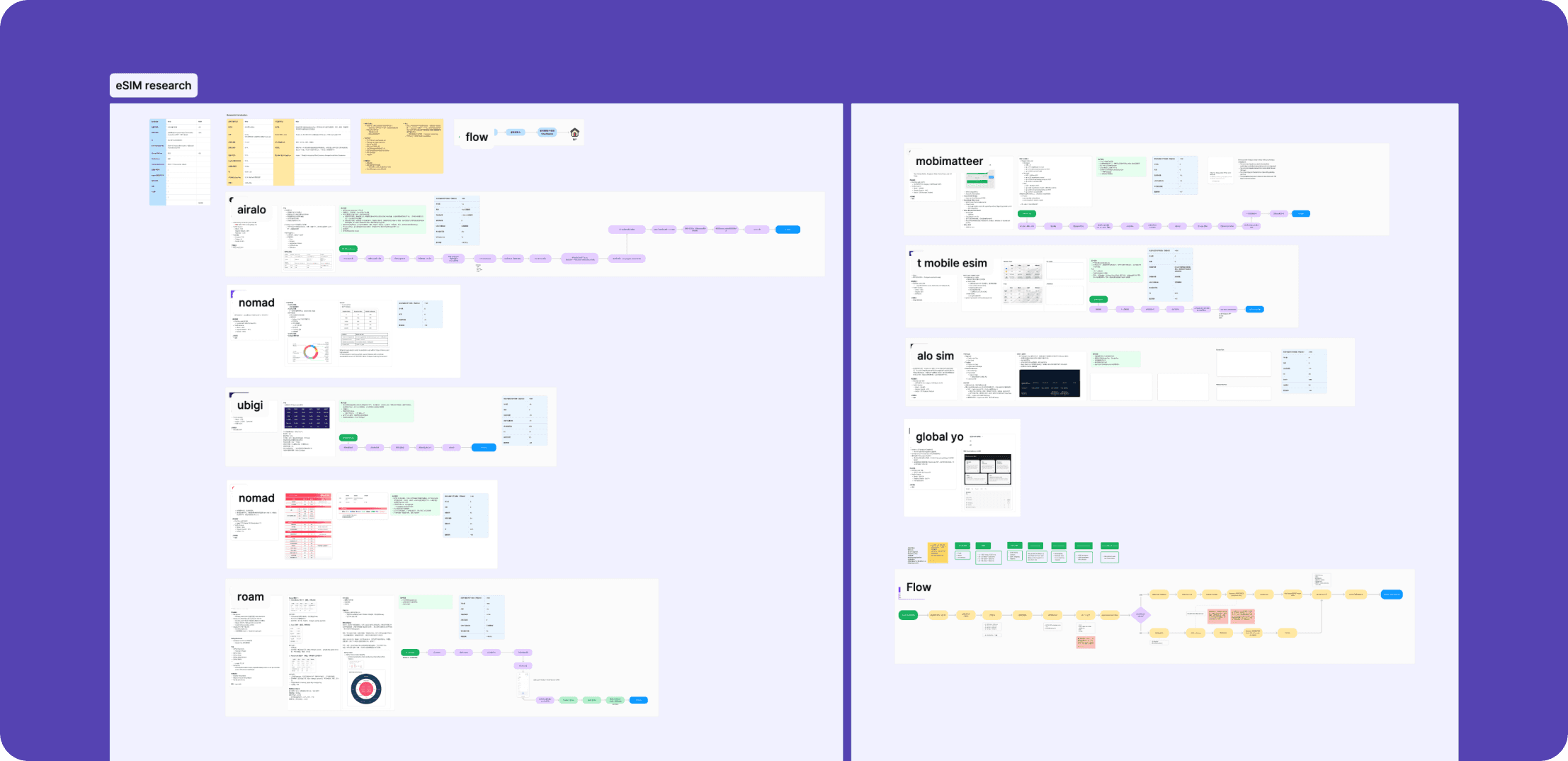
Competitive & Market Analysis

We broke down flows from Airalo, Holafly, Nomad eSIM, and carrier-provided eSIM packages.

In reviewing our competitors, two key insights stood out:


1.Lack of Clear Compatibility Check Before Purchase:

Most competitors did not offer a straightforward or prominent phone compatibility checker upfront. Users often had to dig through FAQs or find out post-purchase if their device would support the eSIM. This created a lot of uncertainty and hesitation.

2.Inconsistent Network Provider Information:

Additionally, competitors often did not specify which local network providers supported each plan. For example, a user buying a plan for the US might not know if they’d be on T-Mobile or AT&T. That kind of transparency was missing, and it’s something we identified as an opportunity to build trust.

Opportunity Space We Identified:

Our opportunity wasn’t just about installation timing. It was about providing a clear compatibility check before purchase, more transparent regional coverage details, and highlighting the network providers behind each plan. By doing this, we could reduce anxiety and help users make more informed, confident choices before they hit “buy.”
Biggest Pain Points

  1. Lack of Clear Installation Guidance

    Many users were confused about how to install the eSIM and whether their device was compatible. They didn’t have a clear, step-by-step guide tailored to their device (iOS or Android), which led to uncertainty.


  1. Complex and Unclear Purchase Flow

    The original purchase flow didn’t highlight compatibility checks or explain the steps clearly. Users didn’t know which devices were supported upfront or what to expect during checkout, making the process confusing.


  1. Difficulty in Managing Multiple Data Plans

    Users needed a better way to manage different eSIM data plans and device statuses, especially if they had multiple devices or family members. The original interface didn’t make it easy to see plan statuses or switch between devices.

Problem Statement

“Travelers need a reliable and predictable way to install and activate eSIM without fear of failure, uncertainty about compatibility, or confusion during the installation and activation journey.“

Building the solution

01

02

Foundation phase

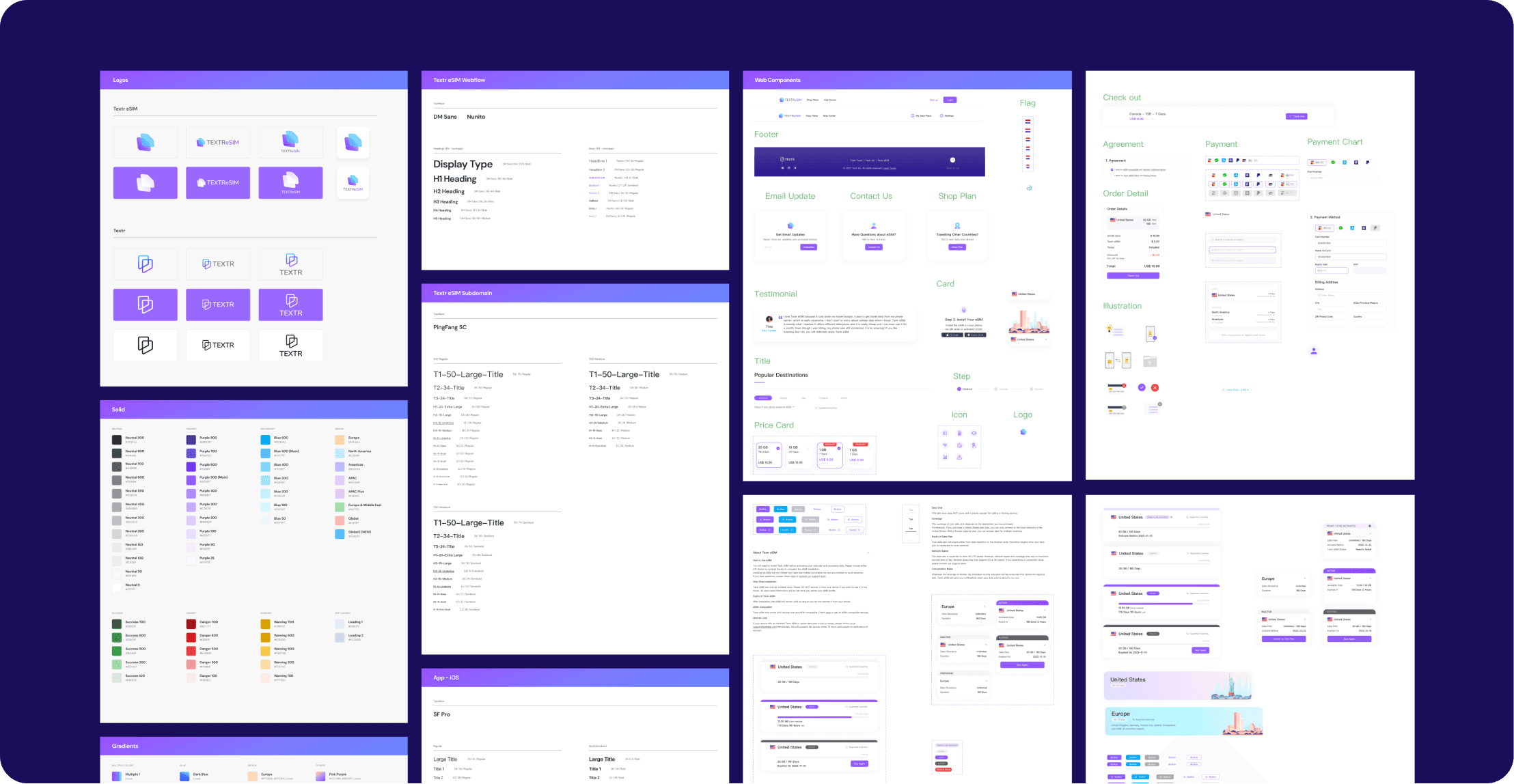
We started with the basics: creating a brand identity that felt trustworthy and approachable.


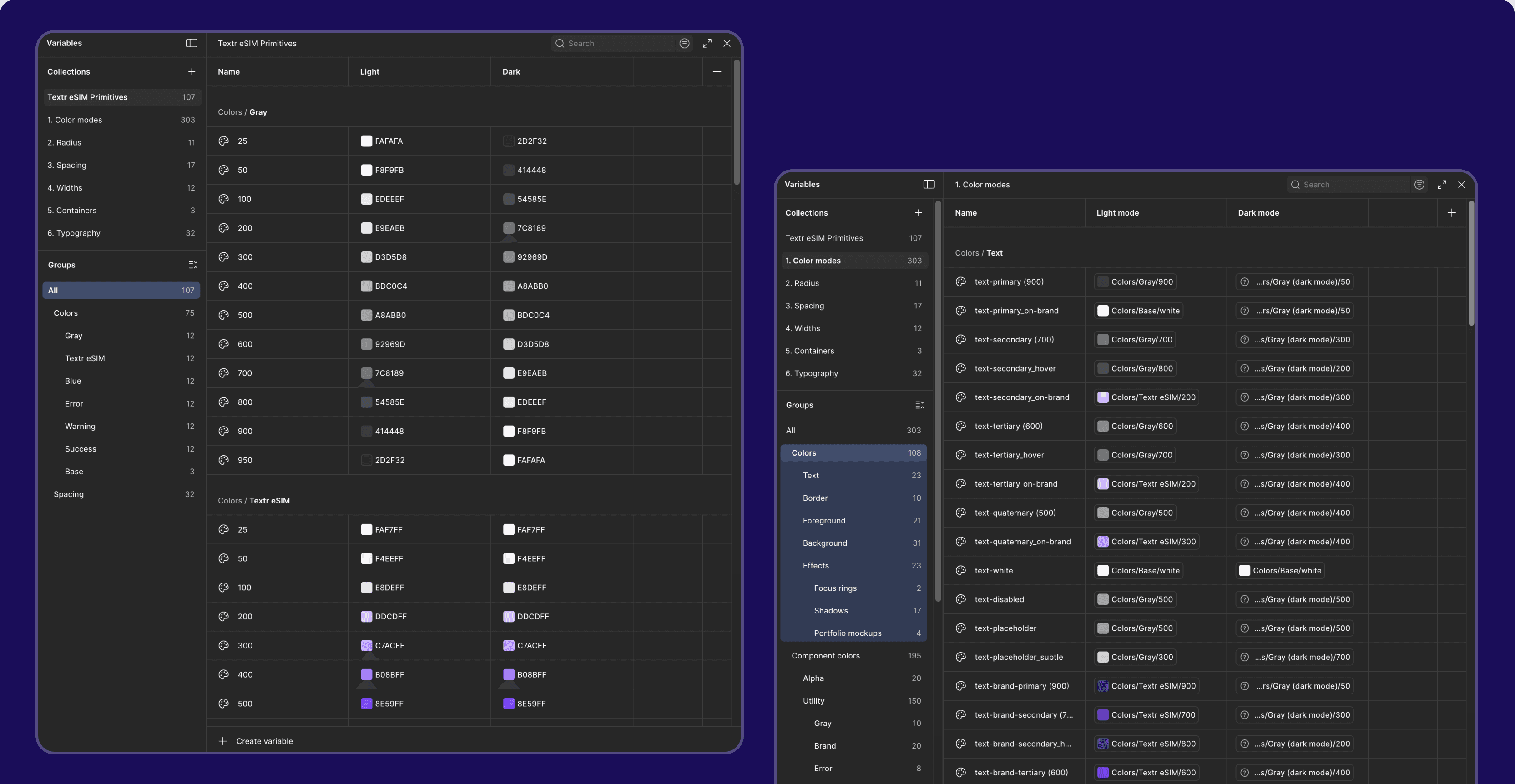
The logo design process became a metaphor for our larger mission - maintaining connection to the familiar (Textr brand) while embracing innovation product (Textr eSIM). Additionally, I developed a style guide and scalable design system to ensure consistency and adaptability.
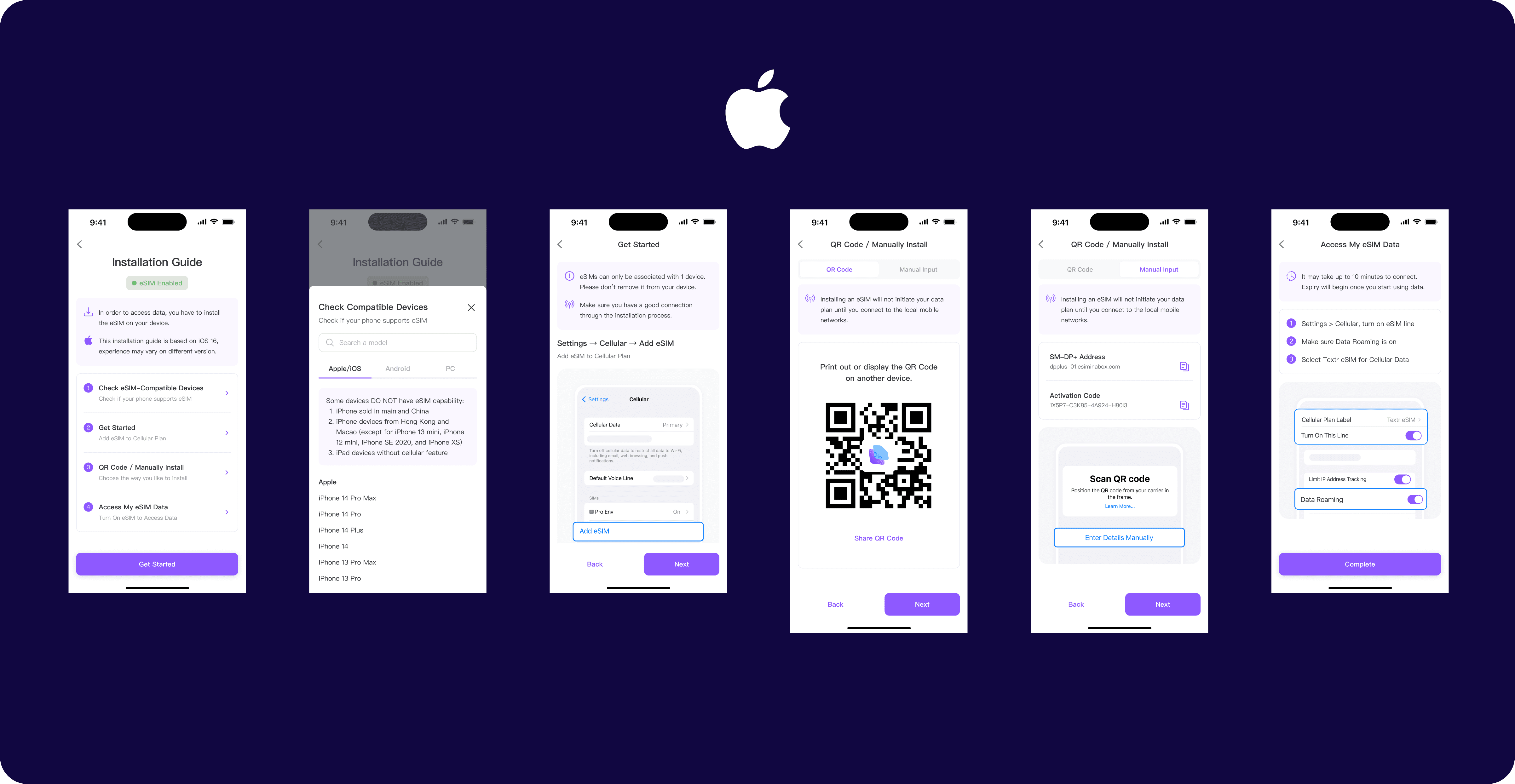
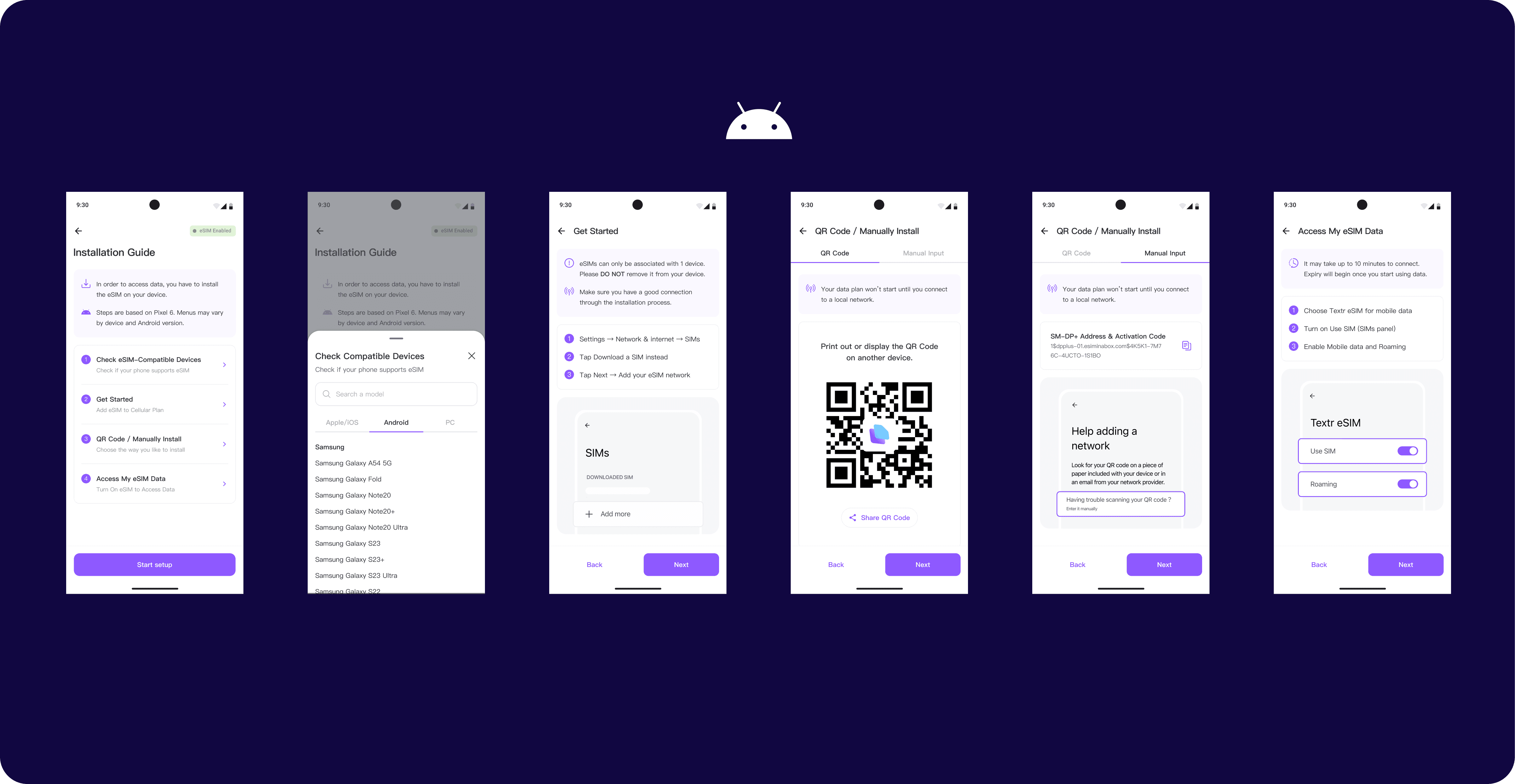
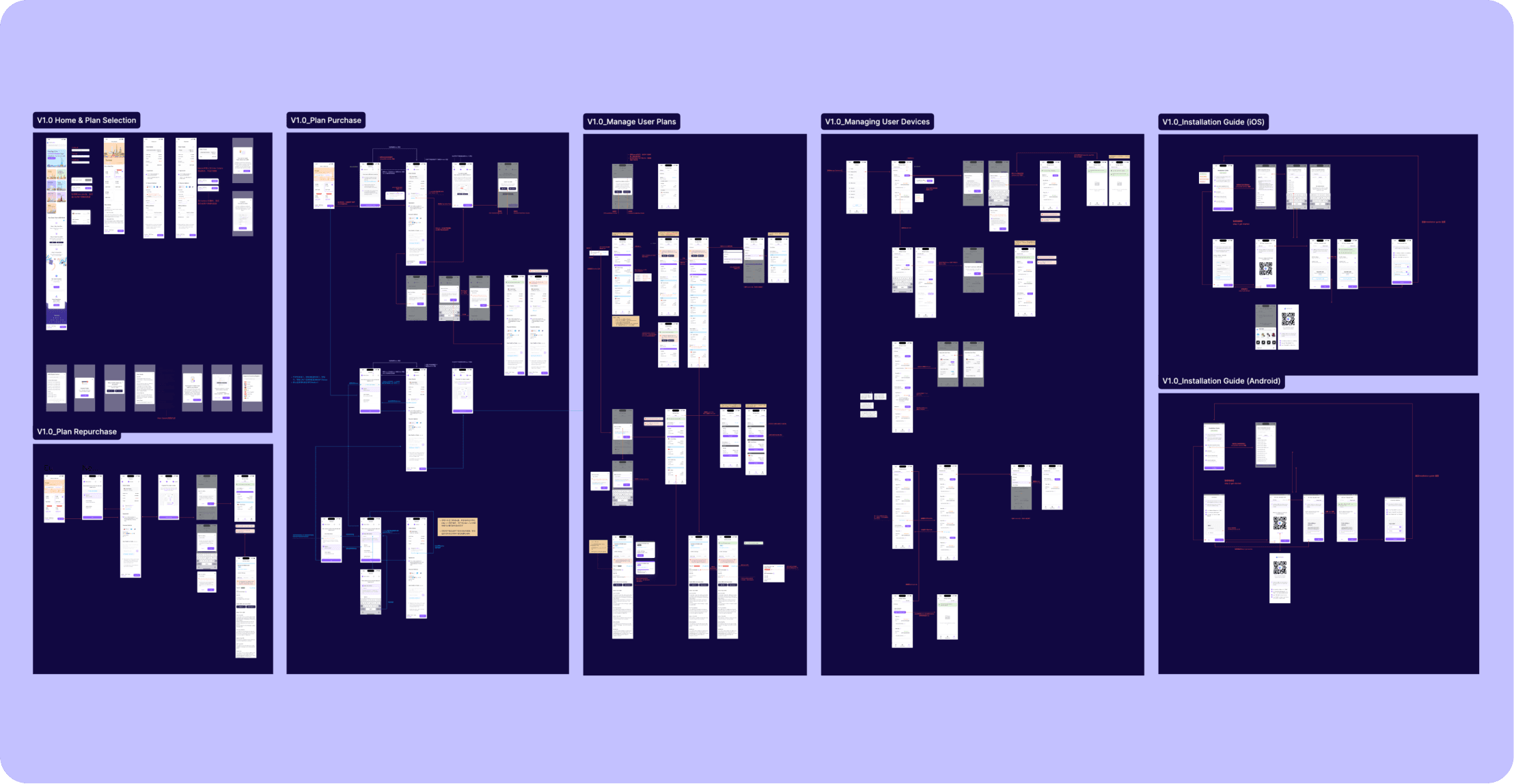
1.Solution for Installation Guidance

Solution

Introduced a tailored installation guide for both iOS and Android users. This included step-by-step instructions and device-specific mockups so users could confidently install their eSIM and confirm compatibility right from the start.
Evolution through understanding

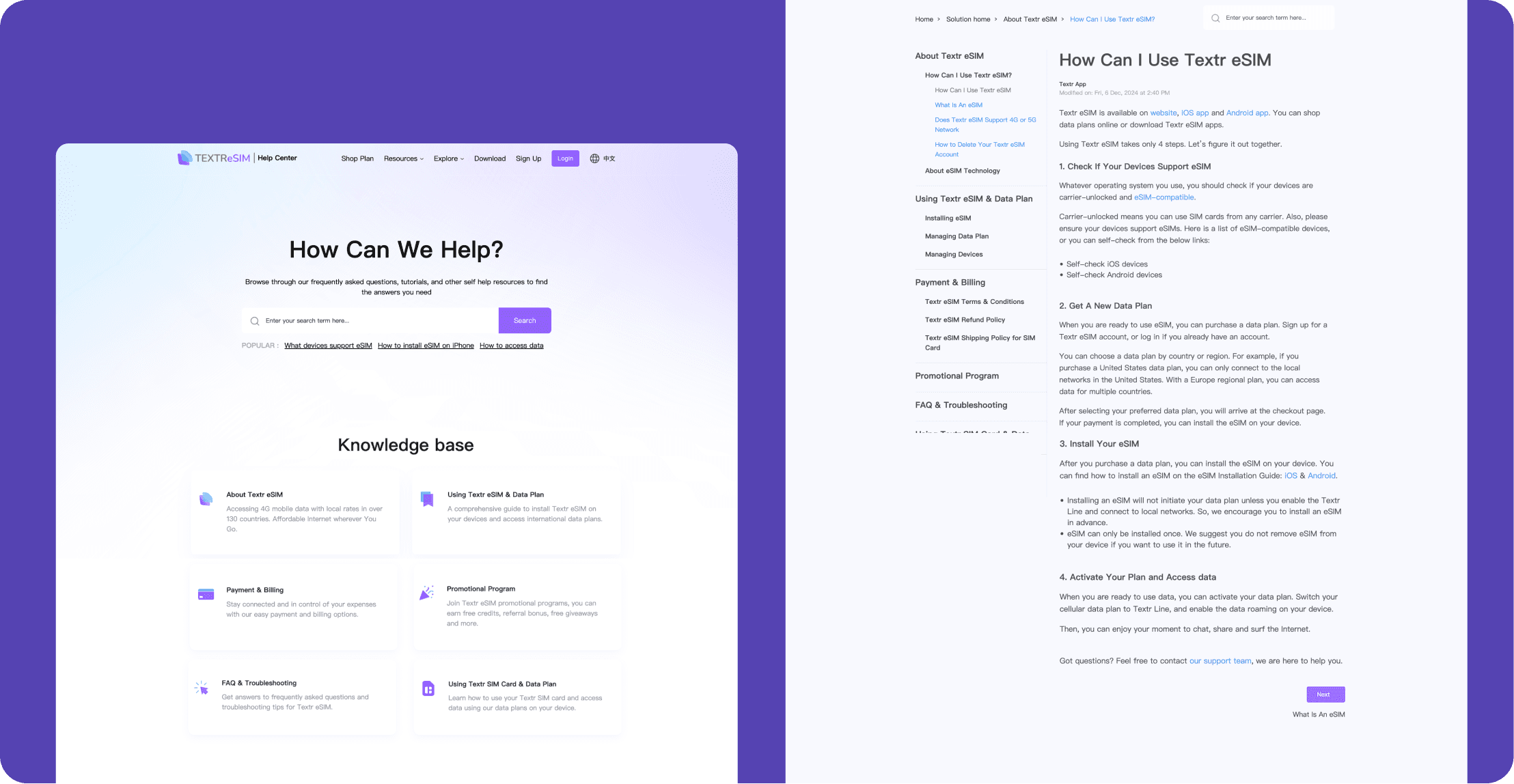
Recognizing that eSIM technology was unfamiliar to many users, I also partnered with our marketing team to create a comprehensive Help Center for our users.
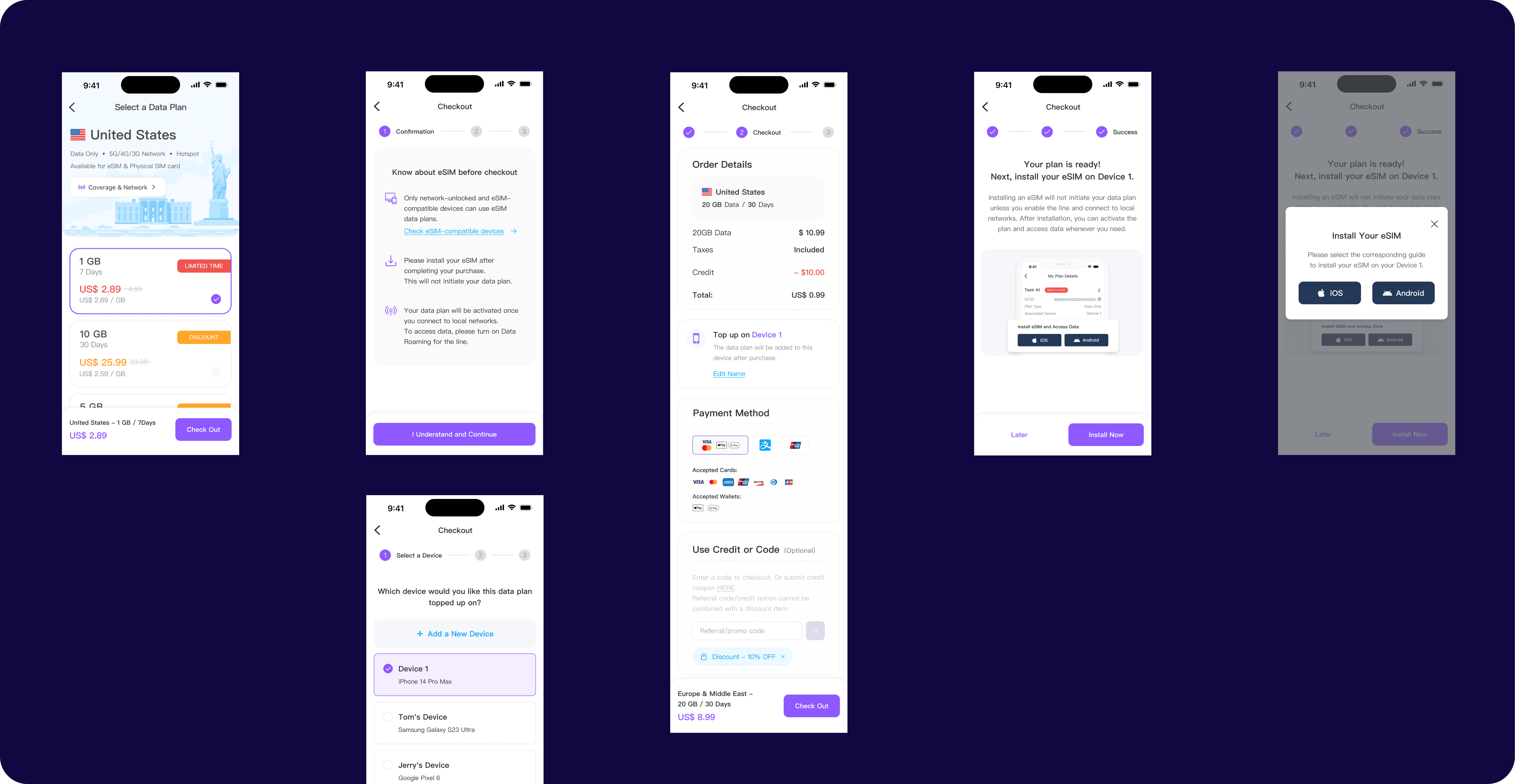
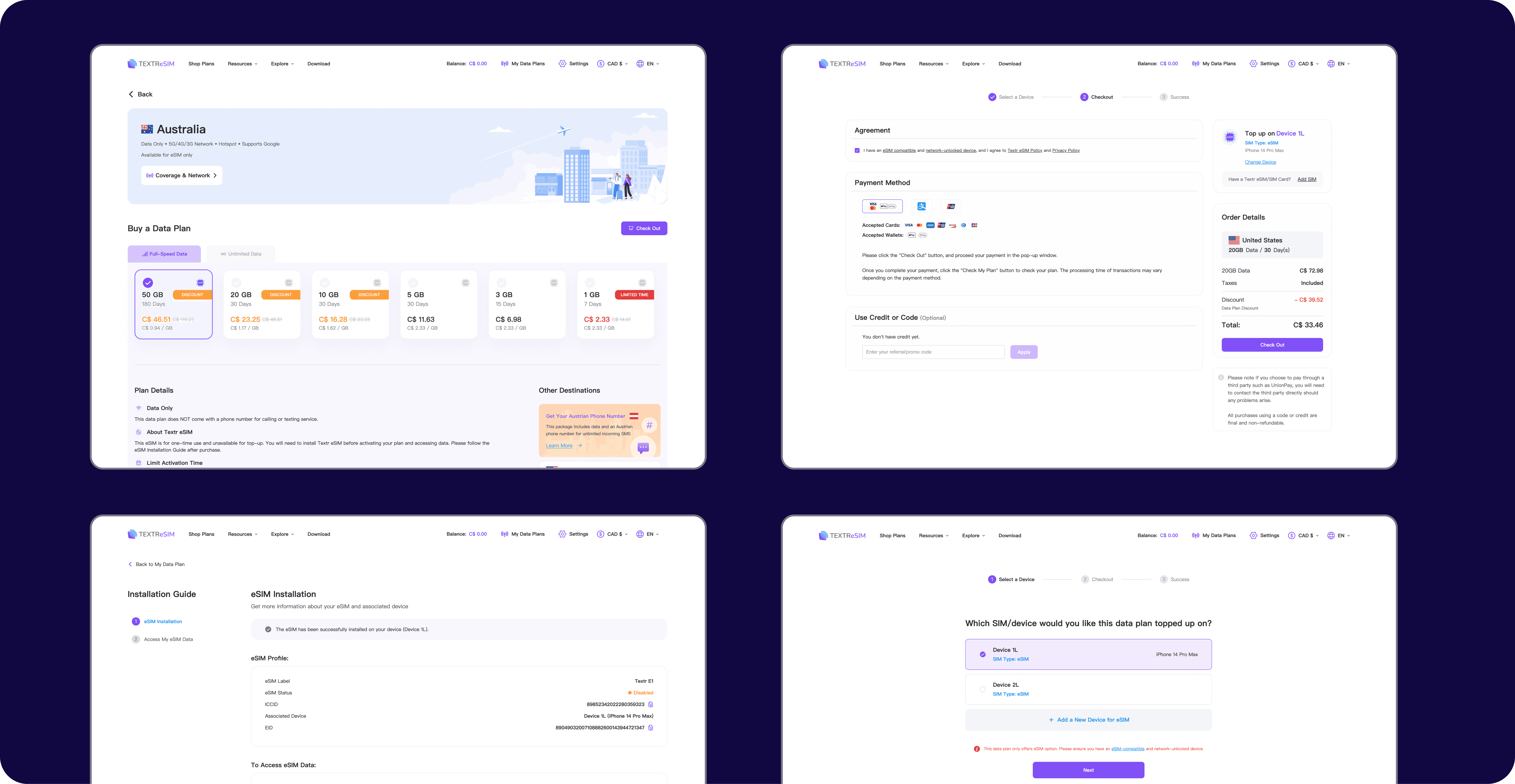
  1. Solution for Purchase Flow Simplification

Solution

We redesigned the purchase flow to include a compatibility check before checkout and made each step of the process clear. We added a step indicator and allowed users to easily see if their device was supported. We also included a promo code field and clear payment options to streamline the experience.
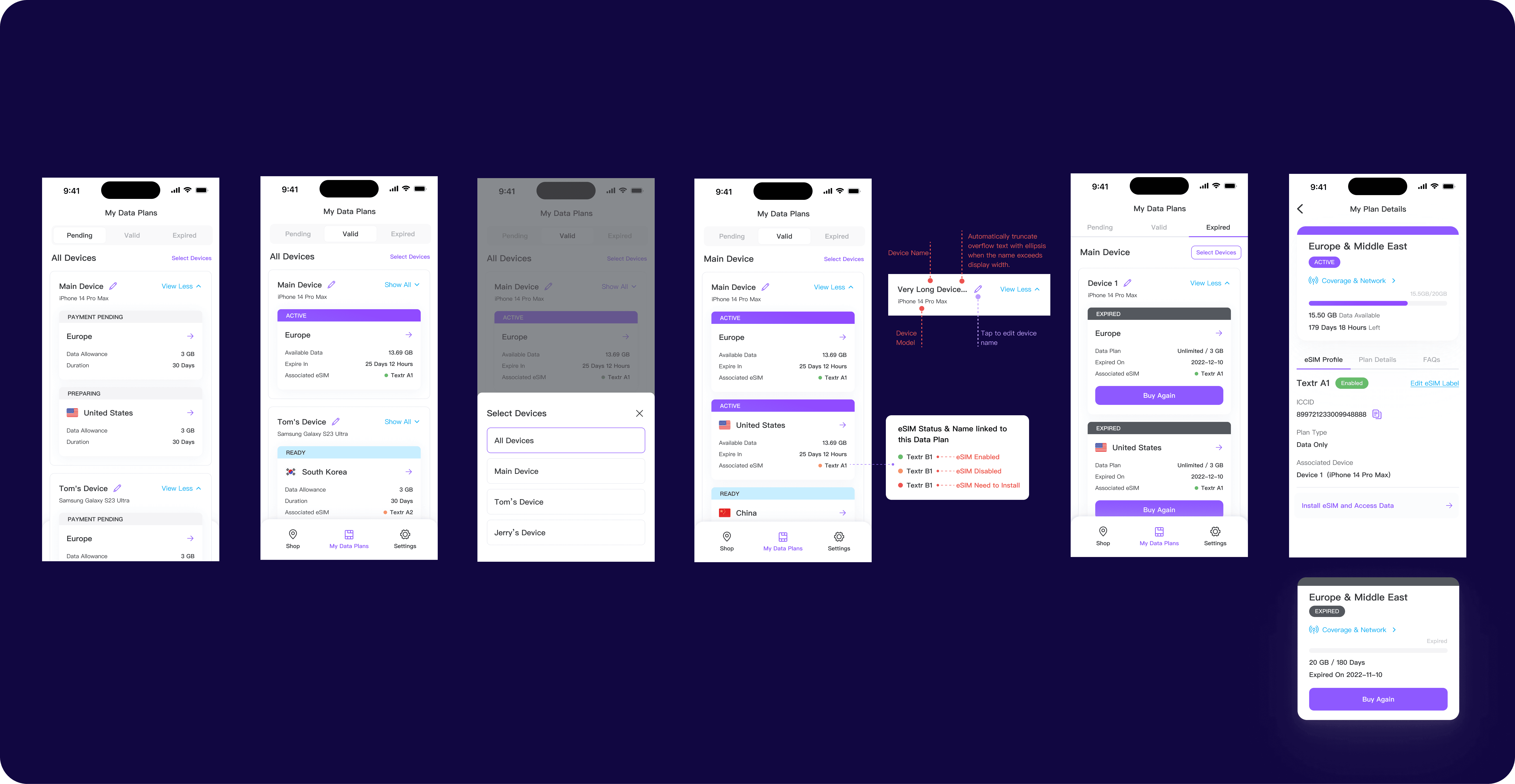
3.Solution for Managing Data Plans

Solution

We created a more intuitive dashboard for managing multiple data plans. Users can now view different plan statuses (like Active, Ready, or Pending) and switch between devices easily. This makes it simple to keep track of multiple eSIMs, especially for users managing plans for family members.
Future Enhancements and Data-Driven Optimizations.

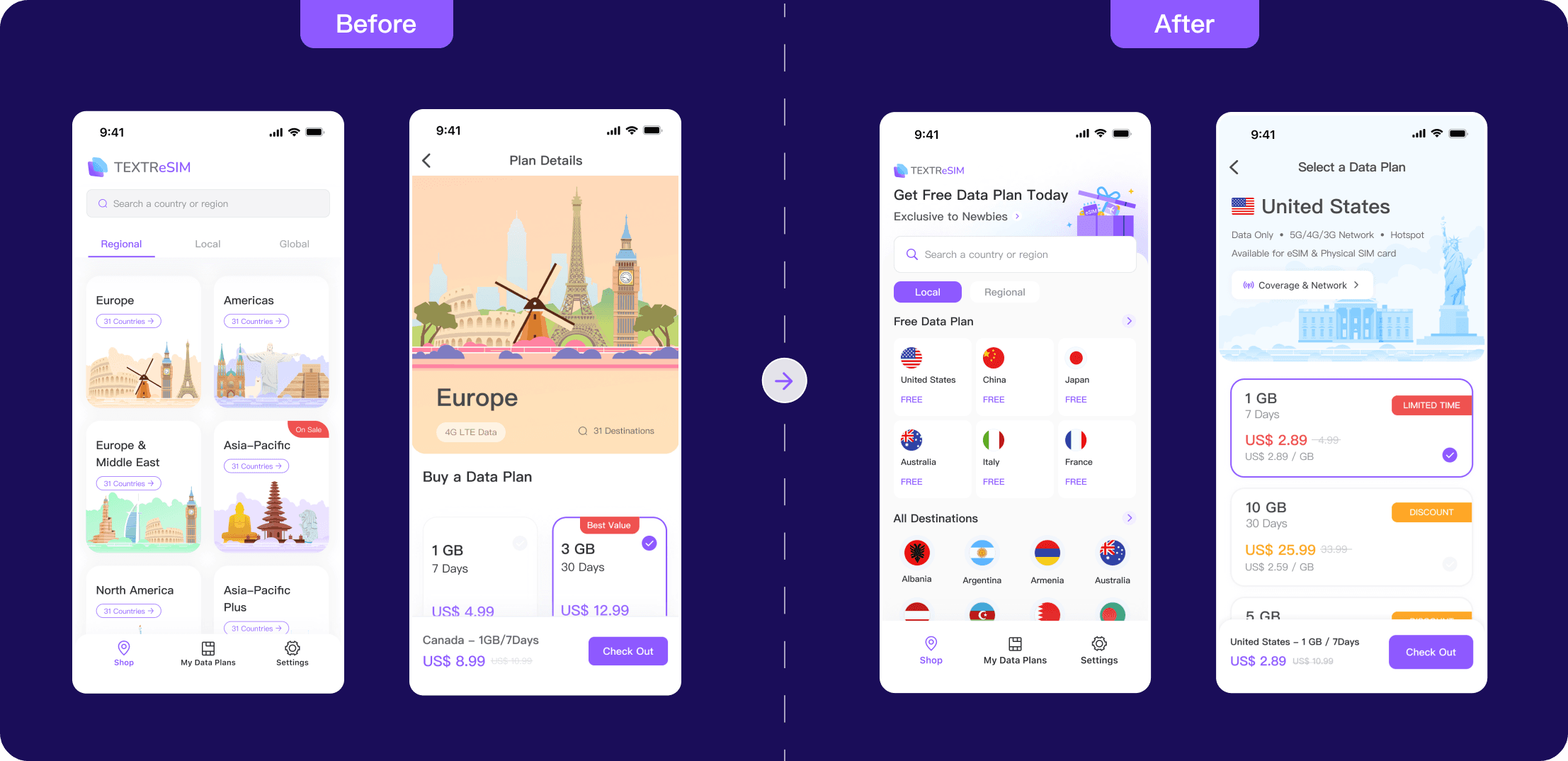
As we iterated on new versions and gathered more data on actual user behavior—using tools like user analytics and purchase tracking—we discovered a clear shift. Initially, the focus was on regional plans because local partnerships were limited. However, as we expanded our local plan offerings, data showed that users were more interested in purchasing country-specific local plans rather than broad regional packages.


In response, we redesigned the homepage to prioritize local plans. We placed the most popular local destinations—like the US, China, and Japan—prominently on the homepage based on user demand patterns. We also added a banner area that can be customized for different marketing campaigns, such as offering free data for new users or highlighting limited-time promotions.


This optimization ensured that users could quickly find the local plans they needed and navigate more intuitively. It was a data-driven update that aligned our offerings with actual user preferences.
Key learnings

Trust beats price in high-risk flows

When technology is unfamiliar, reducing uncertainty and fear drives conversion more than discounts or promotions.

Installation is a product

For system-level features like eSIM, success depends on in-context, device-specific guidance—not generic instructions.

Real users > hypothetical personas

Leveraging an existing user base and support data led to clearer priorities than assumptions or isolated research.

Design systems unlock speed

A shared cross-platform system enabled product, web, and marketing teams to move faster without sacrificing consistency.

Trust beats price in high-risk flows

When technology is unfamiliar, reducing uncertainty and fear drives conversion more than discounts or promotions.

Installation is a product

For system-level features like eSIM, success depends on in-context, device-specific guidance—not generic instructions.

Real users > hypothetical personas

Leveraging an existing user base and support data led to clearer priorities than assumptions or isolated research.

Design systems unlock speed

A shared cross-platform system enabled product, web, and marketing teams to move faster without sacrificing consistency.

Next project

From Concept to a Comprehensive
Communication Solution

Read full story

Next project

From Concept to a Comprehensive
Communication Solution

Read full story

© Tina Tan 2025

© Tina Tan 2025

© Tina Tan 2025